Sorry to have been away so long!  The past couple of months have been taken up partly by a break from work over the summer (although it was a bit of a busman’s holiday this year, as it involved accompanying my husband to festivals for a lot of the summer) and before that – by a huge show that my community choirs were asked to do for the BBC – “Green Fields Beyond”.
We’re now back after the summer break and feeling a little shell-shocked. I had decided to take things a bit easy, but no sooner was I back from holiday than the phone started ringing with requests for us to sing. We can’t do everything – everyone has other commitments as well – but the last quarter of the year is a problematical one for choir leaders and singers.
Problem 1: Everyone wants to book you in for Christmas singing. Everyone loves carolling at Christmas. However…. No-one really wants to be singing Christmas carols in September. It’s difficult to just produce Christmas carols in late November without having done several weeks of practice beforehand. But “I’m Dreaming of a White Christmas” on a blazing hot day in September? Hrmmm….
Problem 2: People booking events in November want a whole different programme of music. Non-Christmassy music. I’m currently working towards a charity event in late November with a very varied programme – a Celtic hymn of blessing, a Gary Barlow number and some Enya. Only one of these is something in our standard repertoire, and the Enya is a reasonably complicated piece. We’re also starting working on material for a themed show next year. That’s a LOT of pieces of music to fulfill everything around December. But come December, all we’ll be singing is Hymns Ancient and Modern and Nat King Cole, I guarantee it…
Basically, people don’t understand that in order to produce a programme of themed music (whatever the theme is: Christmas, Show tunes, 70’s hits or anything else) requires a whole lot of work from the choir director (repeatedly clicking “Buy Now” on the sheetmusic.com site…) and even more from the singers. Considering that the average choir meets for a couple of hours once a week or so, that’s a big ask.
There’s also the question as to how the singers consider their time within the choir itself. Are they there to sing in the moment, or are they there to practice singing for a performance in a few week/month’s time? If there are a variety of opinions, which opinion takes precedence?
It’s all pretty tricky.
Personally, I’m of the opinion that a little bit of thought and consideration can go a very long way, as can performing out-of-season songs, and making it clear that a specialised programme is a long-term commitment and not something that people can just pull out of the air as if by magic… That’s certainly the way I’m taking it. It looks likely that our Christmas programme will feature “May It Be” by Enya, alongside “White Christmas” though…
 of performing in public – some
 I was recently passed a clipping about a fascinating study being undertaken by Tenovus Cancer Care. They are a charity providing support to cancer patients and funding lots of different research.
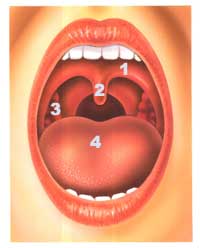 When we first start to sing, we do so instinctively. We just open our mouths and make a noise. Sometimes the instinctive noise we make sounds good, and sometimes it isn’t so great. Whether the noise that you, individually, make is a good or a poor sound is pretty much a case of good or bad luck. It is not that most insidious of things, “talent” (for what it’s worth, I don’t believe it exists, it’s all about hard work in my book…), and you should absolutely not believe someone if they tell you that.
 Picture your lungs. They aren’t a regular shape, they are a little more pear-shaped, really. Bigger at the bottom where the diaphragm sits below them in your middle. In order to inflate them *fully*, you really need to focus on sticking out your tummy when you breathe in at first and then filling your lungs from the bottom up. This will have the effect of pulling your diaphragm down, expanding your lower ribs, and making room for your lungs to expand in all directions, making sure that you have plenty of air ready for a long, slow, steady release.
 We all want different things from music, and particularly singing, I’ve discovered over the years. For some people, what they want is to sing riotous chorus songs and sea shanties, whilst others crave the precision and interplay of intricate Barbershop performances.
 Oh, that sounds so professional… It sounds like I know what I’m talking about, doesn’t it? What does it mean, though?
 Much as we would like to think that every time we open our mouths in a musical setting, it is like angels singing, and we are always perfectly rehearsed with exactly the right words in front of us, and remembering every single tip and hint we’ve heard whilst learning the songs, we know it doesn’t happen like that.
 Last time we looked at how words can affect small children, crushing their self-esteem and leaving them unable to join in with our singing culture for decades. It’s horrible. Don’t do it.
 You’d be surprised at how many people come to my community choirs (and from what I’ve heard from other choir leaders – their community choirs, too) with absolutely no self-confidence in their ability to be able to sing.